Pharmacology of Anthelmintic Agents

Pharmacology of Anthelmintic Agents
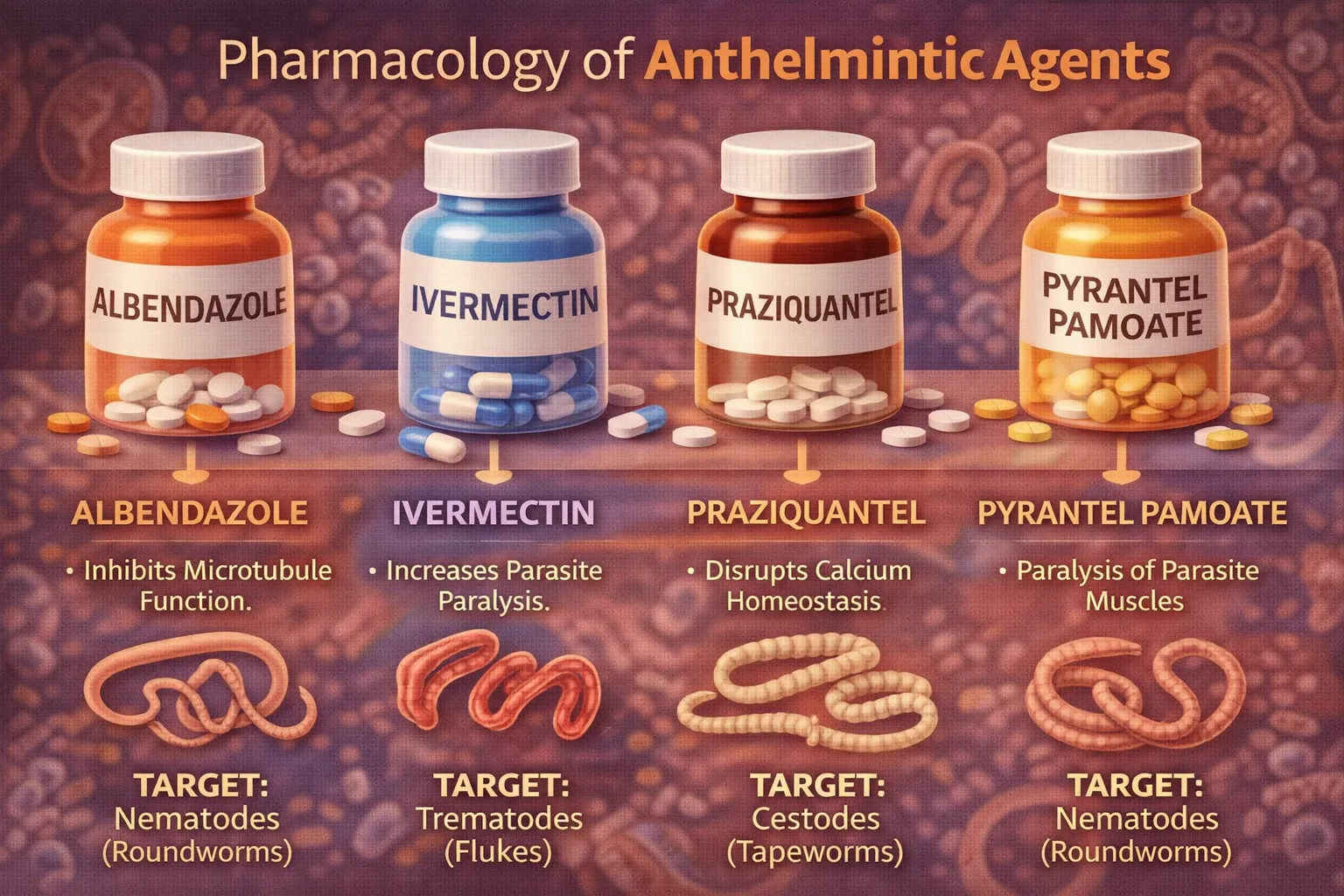
Pharmacology of Anthelmintic Agents explains mechanisms and actions of drugs used to kill or expel parasitic worms. Pharmacology of Anthelmintic Agents Helminths (worms) infect the intestinal tract, tissues, or blood. Anthelmintic drugs either paralyze or kill the parasites, leading to their expulsion. Types of Helminths Nematodes (roundworms) Cestodes (tapeworms) Trematodes (flukes) Main Anthelmintic Drugs Benzimidazoles … Read more
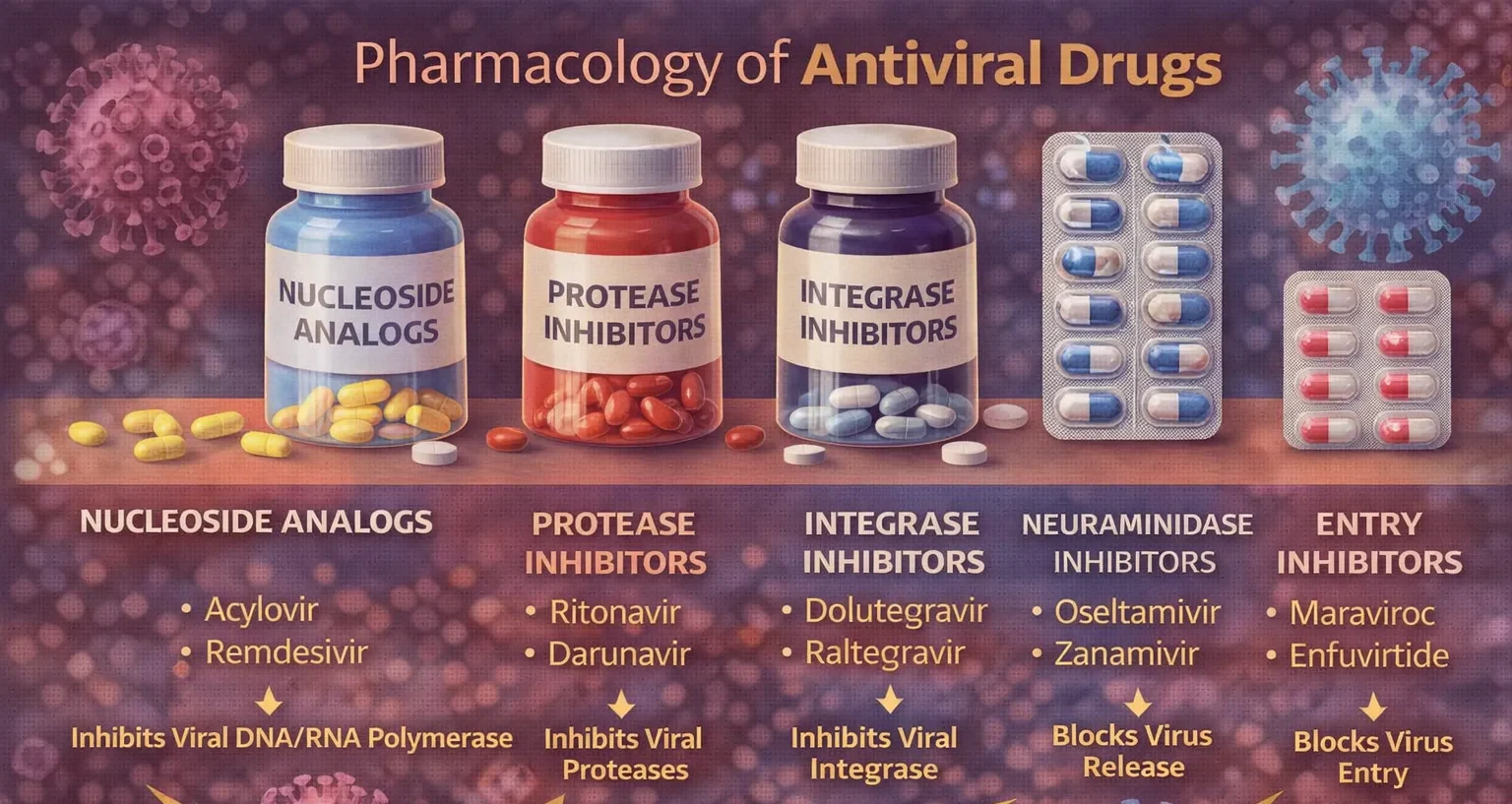
Pharmacology of Antiviral Drugs

Pharmacology of Antiviral Drugs

Pharmacology of Antiviral Drugs explains mechanisms and actions of drugs that inhibit viral replication and treat viral infections. Definition of Pharmacology of Antiviral Drugs Antiviral drugs are used to treat viral infections by targeting specific steps in the viral life cycle, such as: Preventing viral entry Inhibiting replication Blocking release or maturation of new viral … Read more

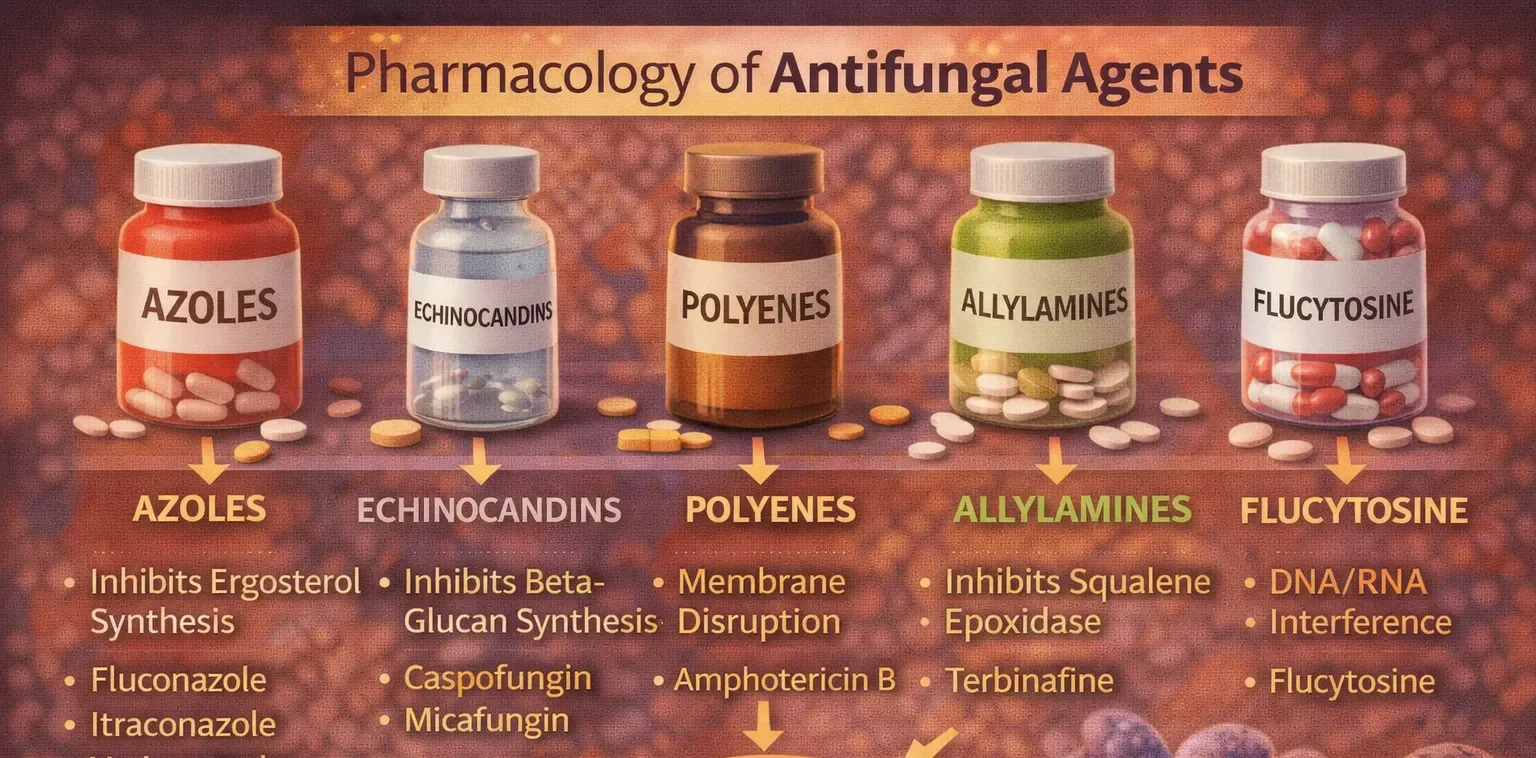
Pharmacology of Antifungal Agents

Pharmacology of Antifungal Agents

Pharmacology of Antifungal Agents explains mechanisms and actions of drugs that inhibit fungal growth or kill fungi. Pharmacology of Antifungal Agents Fungal infections (mycoses) may be: Superficial: Skin, nails, mucous membranes Systemic: In immunocompromised patients (e.g., candidiasis, aspergillosis) Fungi are eukaryotic organisms, so antifungal drugs must be selective to avoid host toxicity. Classes of Antifungal … Read more

Pharmacology of Antileprotic Agents

Pharmacology of Antileprotic Agents

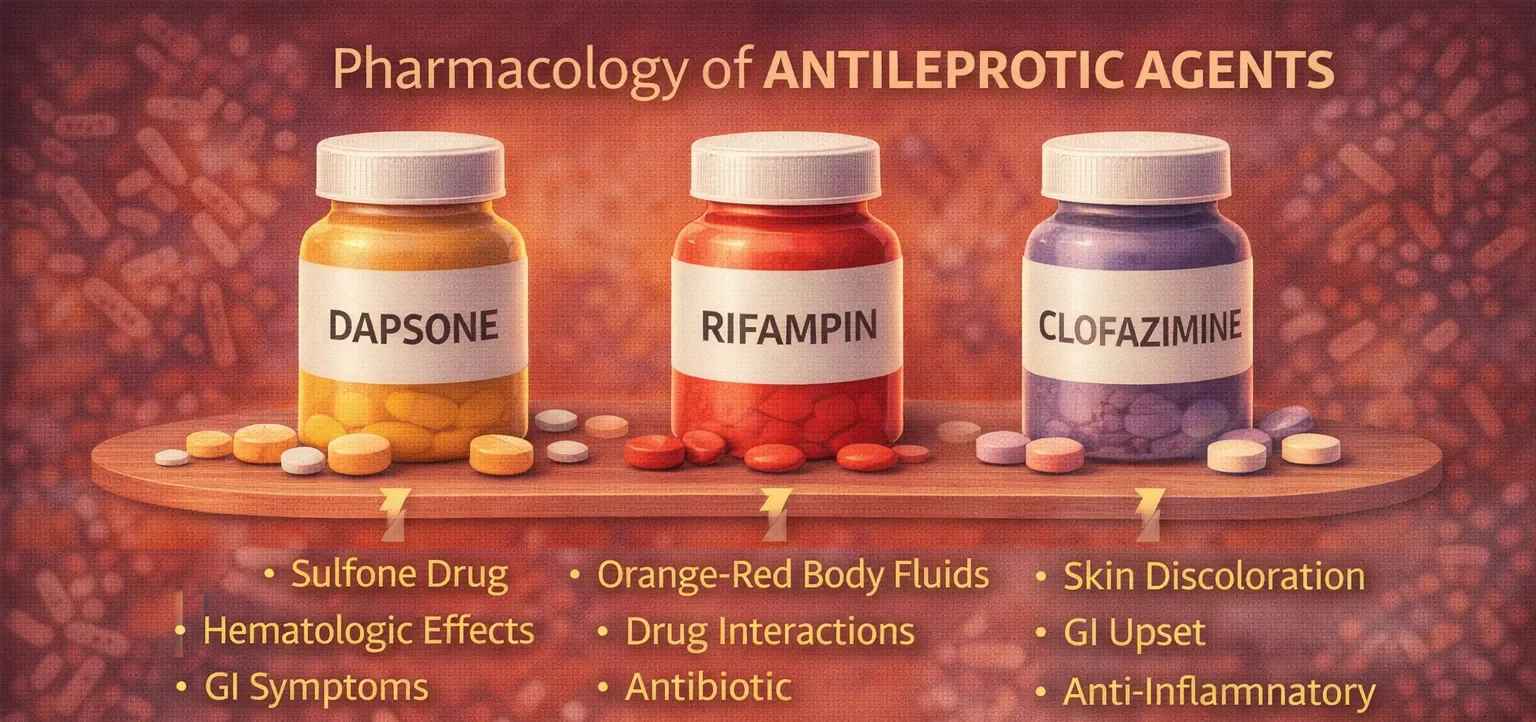
Pharmacology of Antileprotic Agents explains drugs used to treat leprosy by inhibiting or killing Mycobacterium leprae. Overview of Pharmacology of Antileprotic Agents Leprosy (Hansen’s Disease) is caused by Mycobacterium leprae – a slow-growing acid-fast bacillus affecting skin, peripheral nerves, and mucous membranes. Treatment uses multi-drug therapy (MDT) to: Prevent resistance Shorten duration Ensure cure Main … Read more

Leprosy (Hansen’s Disease)

Leprosy (Hansen's Disease)

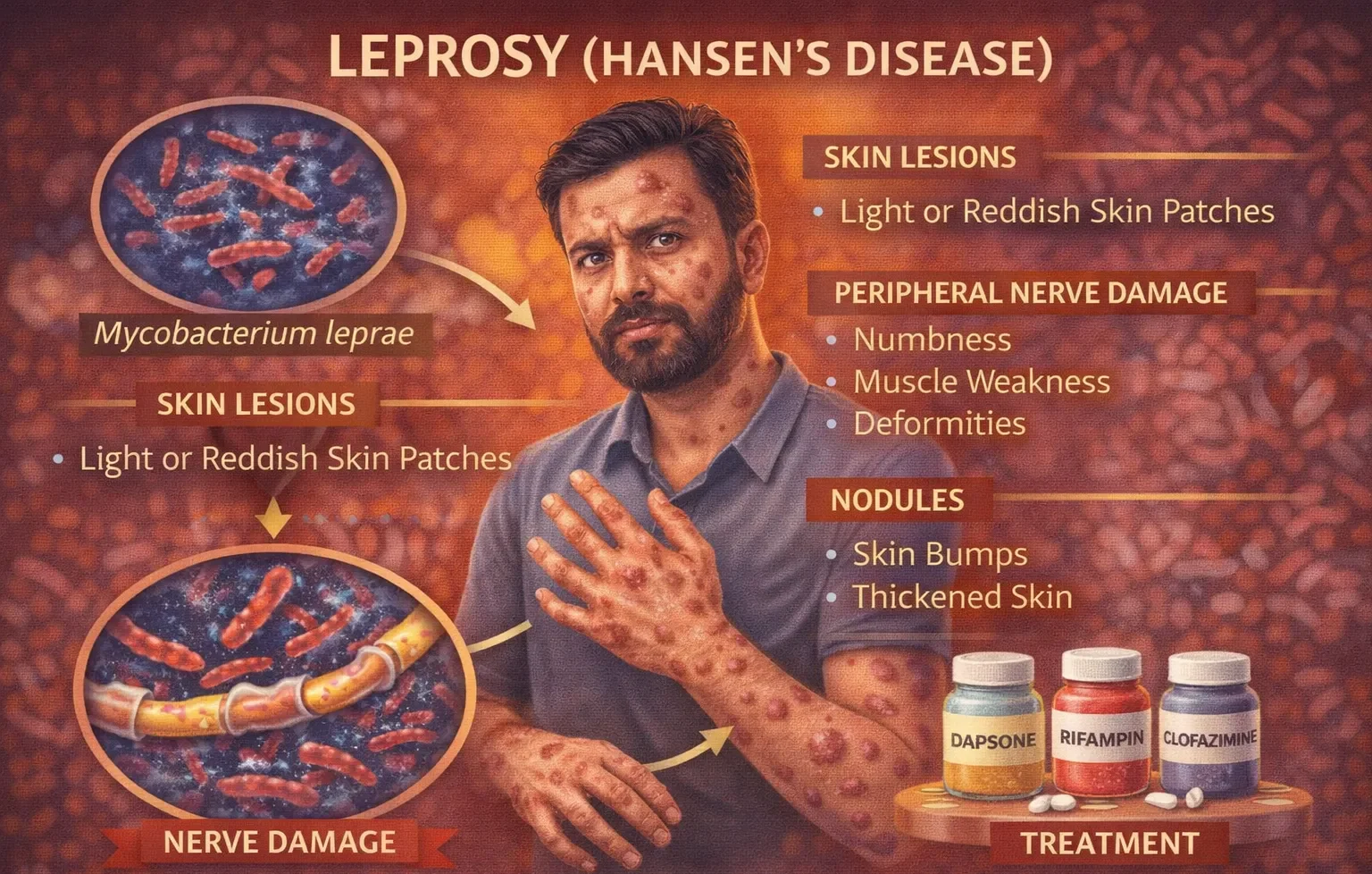
Leprosy (Hansen’s Disease) is a chronic infection caused by Mycobacterium leprae affecting skin and peripheral nerves. Leprosy (Hansen’s Disease) Cause: Mycobacterium leprae Affects: Skin, peripheral nerves, upper respiratory tract Transmission: Prolonged close contact (exact mode not fully understood) Progression: Slow; may lead to disfigurement and disability if untreated Types of Leprosy Type Features Tuberculoid Few, … Read more

Pharmacology of Antitubercular Agents

Pharmacology of Antitubercular Agents

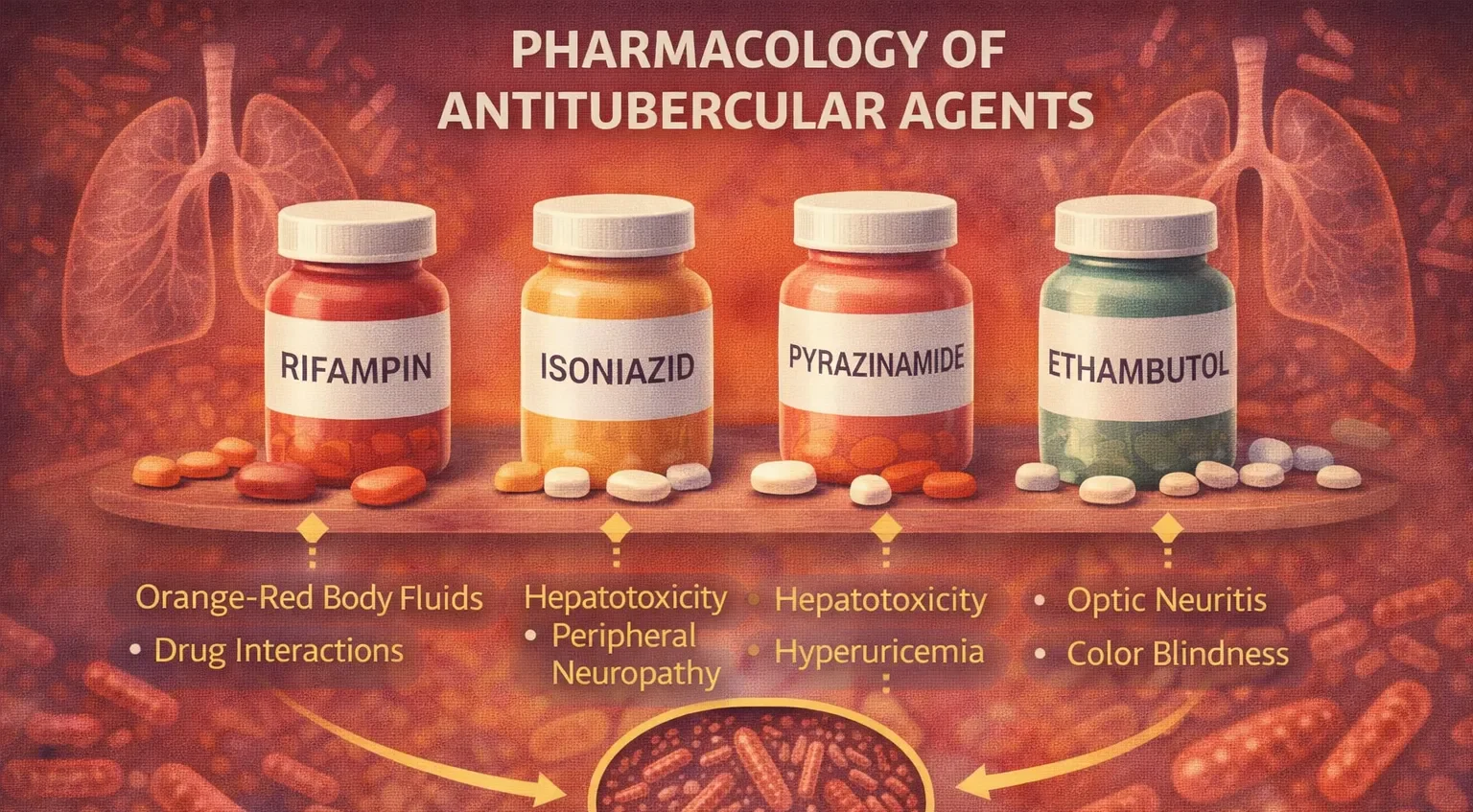
Pharmacology of Antitubercular Agents explains mechanisms and actions of drugs used to kill or inhibit Mycobacterium tuberculosis. Pharmacology of Antitubercular Agents Tuberculosis (TB) is a chronic infectious disease caused by Mycobacterium tuberculosis. Effective treatment requires a prolonged, multi-drug regimen to achieve the following goals: Prevent resistance Ensure complete eradication of the bacteria Treat both active … Read more

Quinolones and Fluoroquinolones

Quinolones and Fluoroquinolones

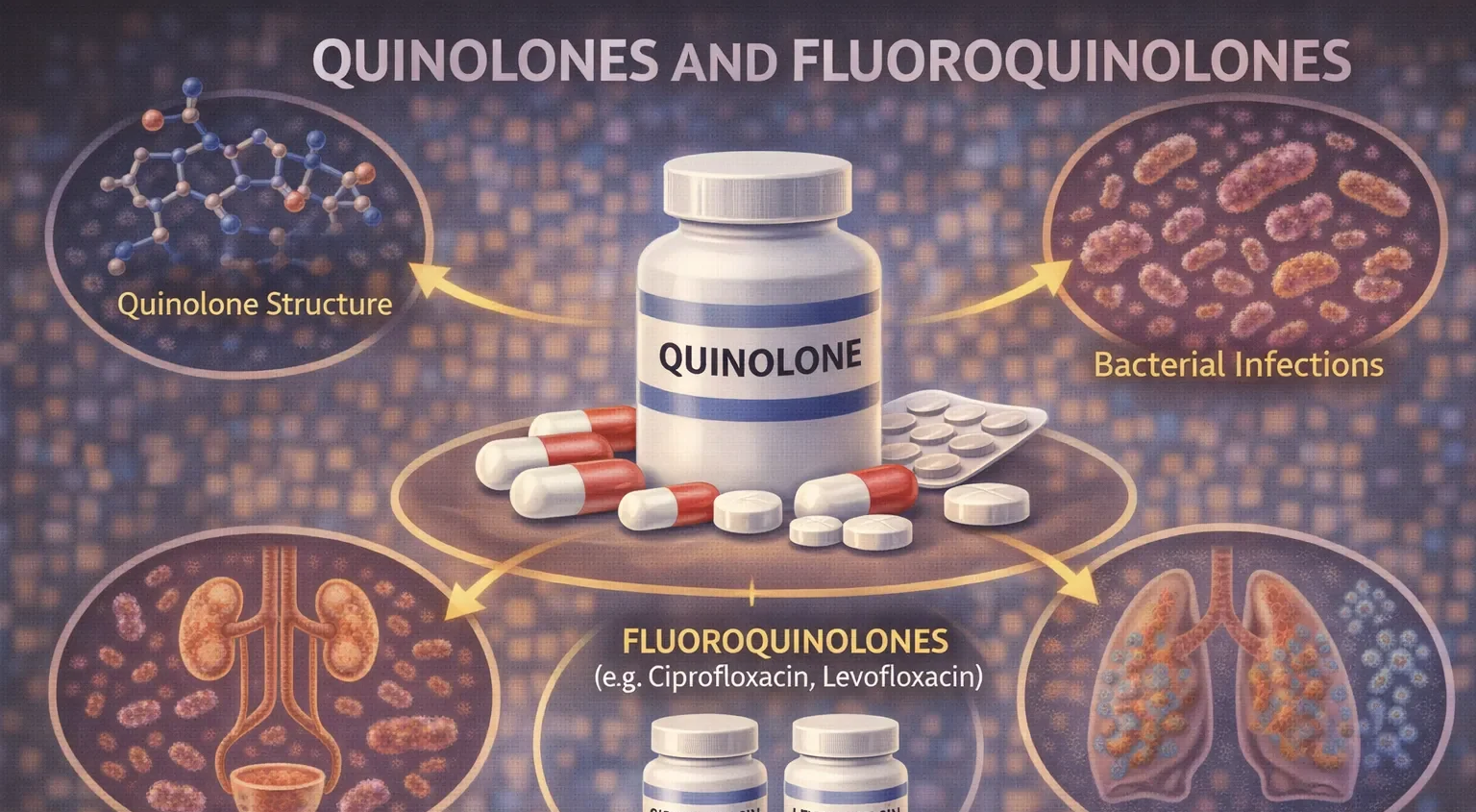
Examples of Quinolones and Fluoroquinolones: Quinolones: Nalidixic acid (older) Fluoroquinolones: Ciprofloxacin, Levofloxacin, Ofloxacin, Moxifloxacin Mechanism of Action: Inhibit DNA gyrase (topoisomerase II) and topoisomerase IV, interfering with DNA replication. Spectrum: Broad-spectrum: good for Gram-negative, some Gram-positive, and atypicals. Newer generations cover anaerobes and Pseudomonas. Resistance: Mutation in gyrase/topoisomerase Efflux pumps Adverse Effects: GI upset Tendonitis, … Read more

Penicillins

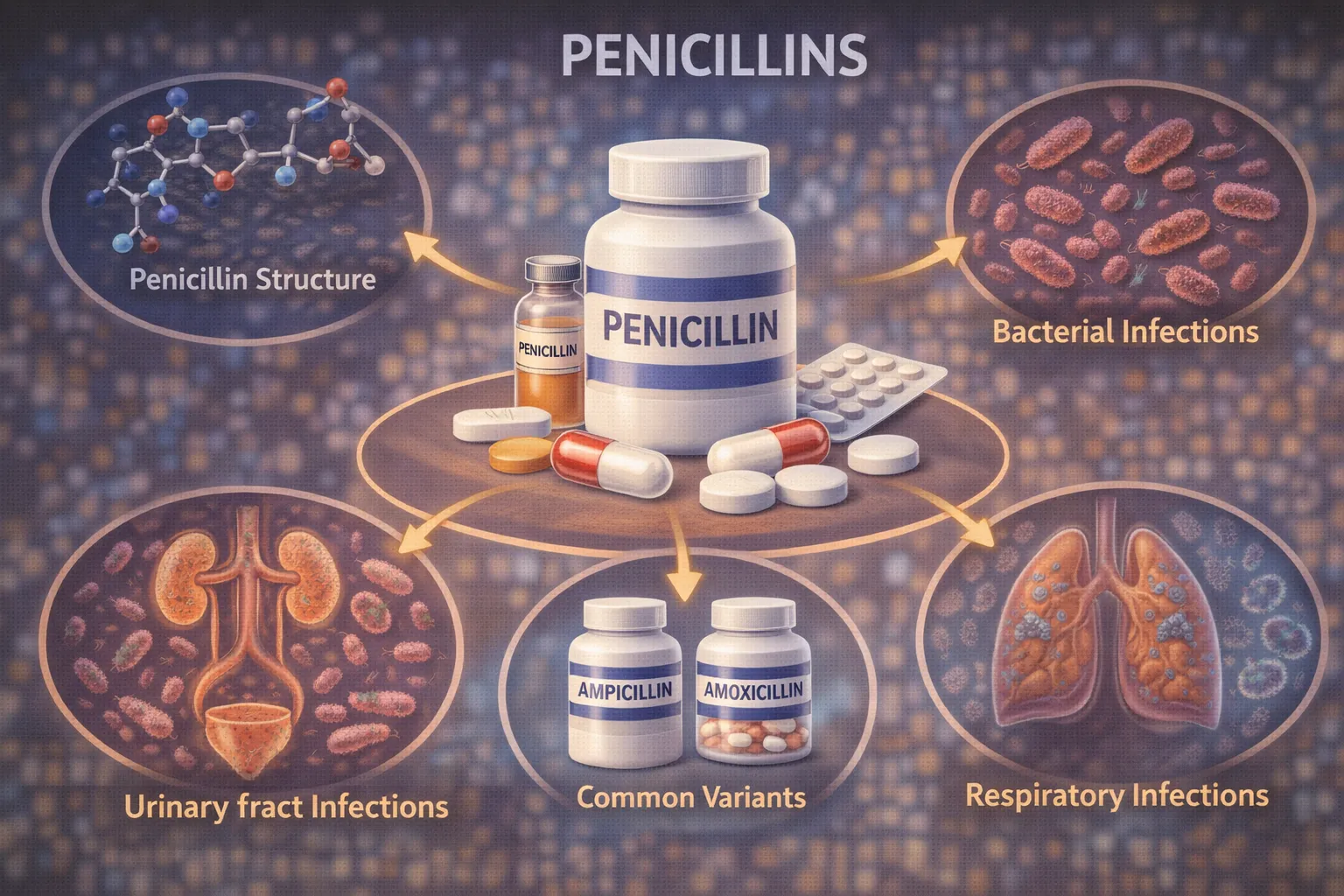
Penicillins

Penicillins are β-lactam antibiotics that inhibit bacterial cell wall synthesis and are widely used to treat infections. Mechanism of Action: These are β-lactam antibiotics that inhibit bacterial cell wall synthesis. They bind to penicillin-binding proteins (PBPs) and inhibit the transpeptidation step in peptidoglycan synthesis, causing bacterial cell lysis. Types of Penicillins Natural – e.g., Penicillin … Read more

Cotrimoxazole (Trimethoprim + Sulfamethoxazole)

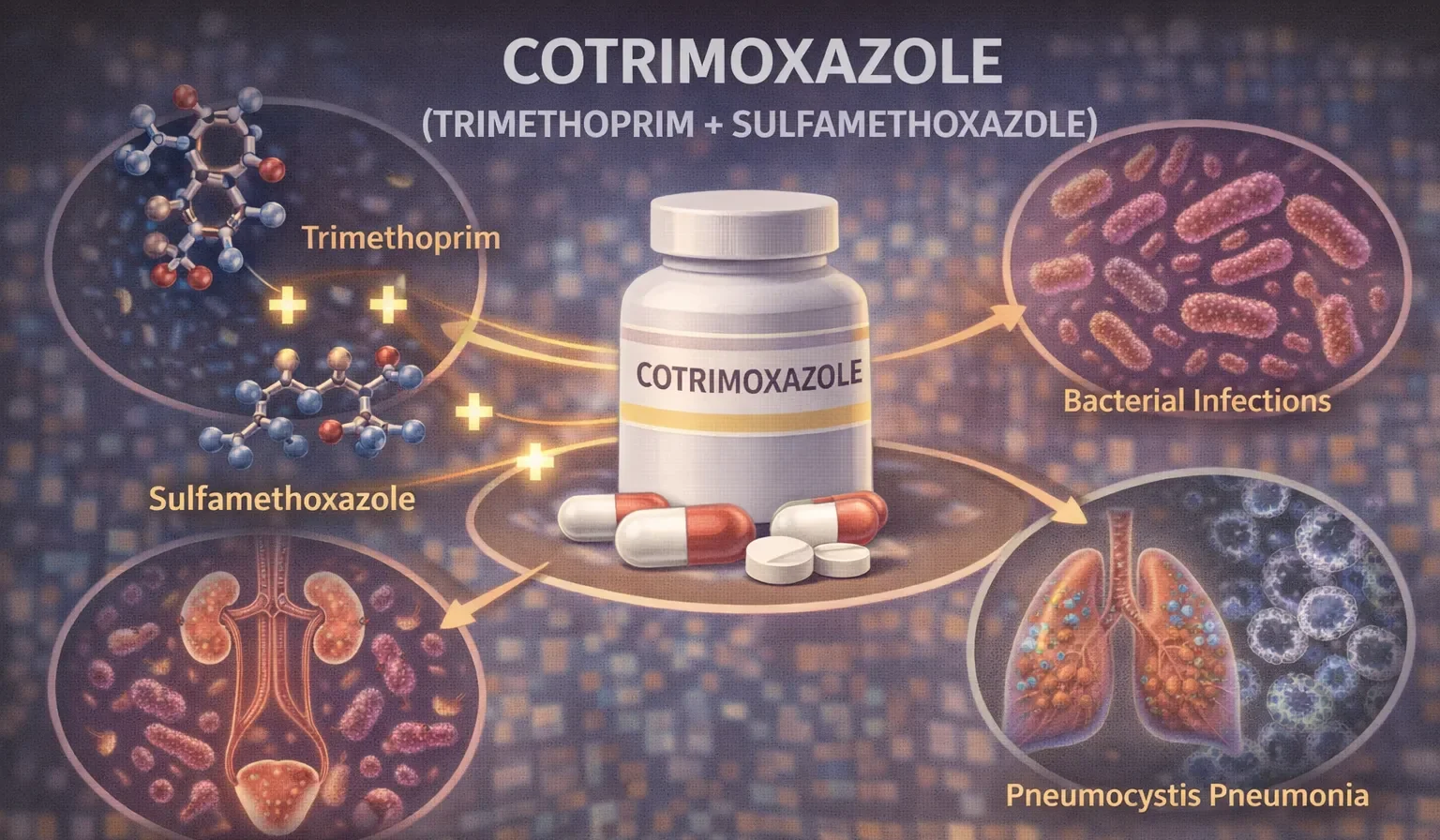
Cotrimoxazole (Trimethoprim + Sulfamethoxazole)

Cotrimoxazole (Trimethoprim + Sulfamethoxazole) Cotrimoxazole is a combination antibiotic containing sulfamethoxazole and trimethoprim. Mechanism of Action Sulfamethoxazole: Inhibits dihydropteroate synthase, blocking folic acid synthesis → inhibits DNA/RNA production. Trimethoprim: Inhibits dihydrofolate reductase, further blocking folic acid formation. Combined effect: Sequential blockade of folic acid synthesis enhances antibacterial activity. Pharmacokinetics Absorption: Rapid and complete via GI … Read more

Sulfonamides (Sulfa Drugs)

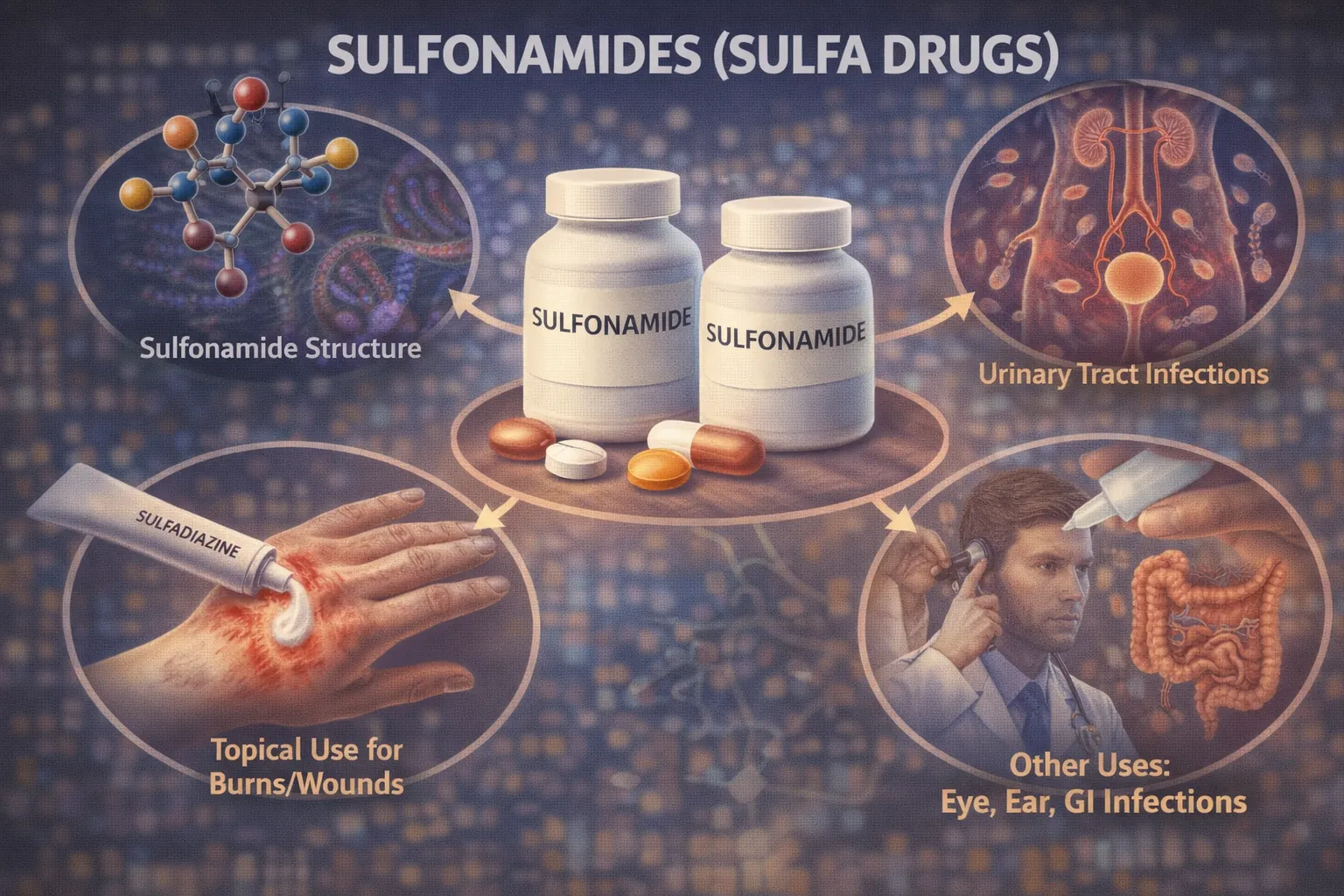
Sulfonamides (Sulfa Drugs)

Definition of Sulfonamides (Sulfa Drugs) Sulfonamides are synthetic antimicrobial agents used to treat bacterial infections. Available in oral and topical forms (tablets, creams, solutions). Mechanism of Action They inhibit dihydropteroate synthase, an enzyme involved in folic acid synthesis, essential for bacterial DNA/RNA production — resulting in a bacteriostatic effect. Classification of Sulfonamides Sulfonamides, or sulfa … Read more