Diarrhoea

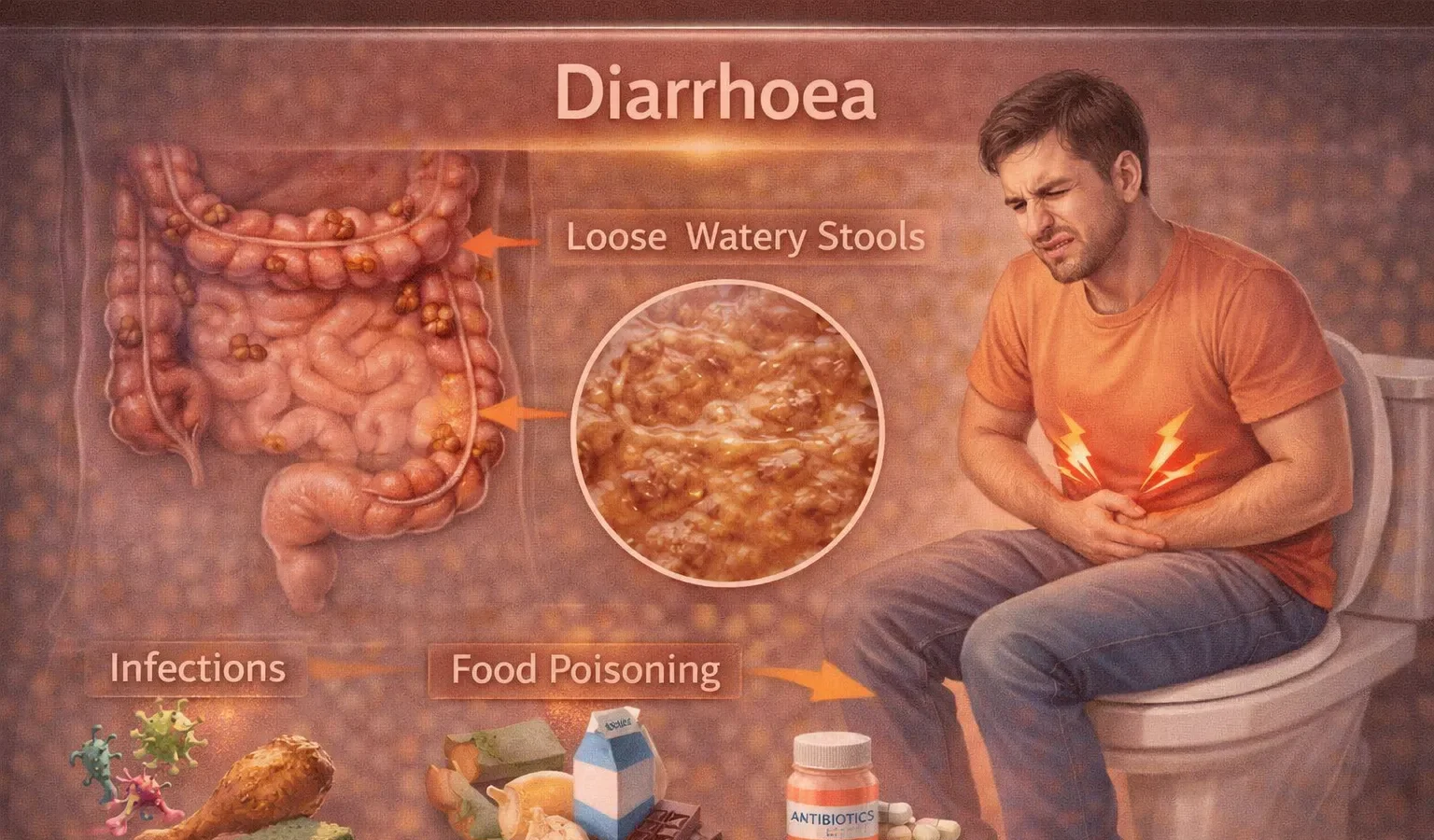
Diarrhoea

Definition of Diarrhoea Diarrhoea is the passage of loose or watery stools three or more times a day. It may be acute or chronic, depending on its duration and cause. Types of Diarrhoea Acute Lasts a few days Usually caused by infections (viral, bacterial, or parasitic) Chronic Lasts more than two weeks Often related to … Read more
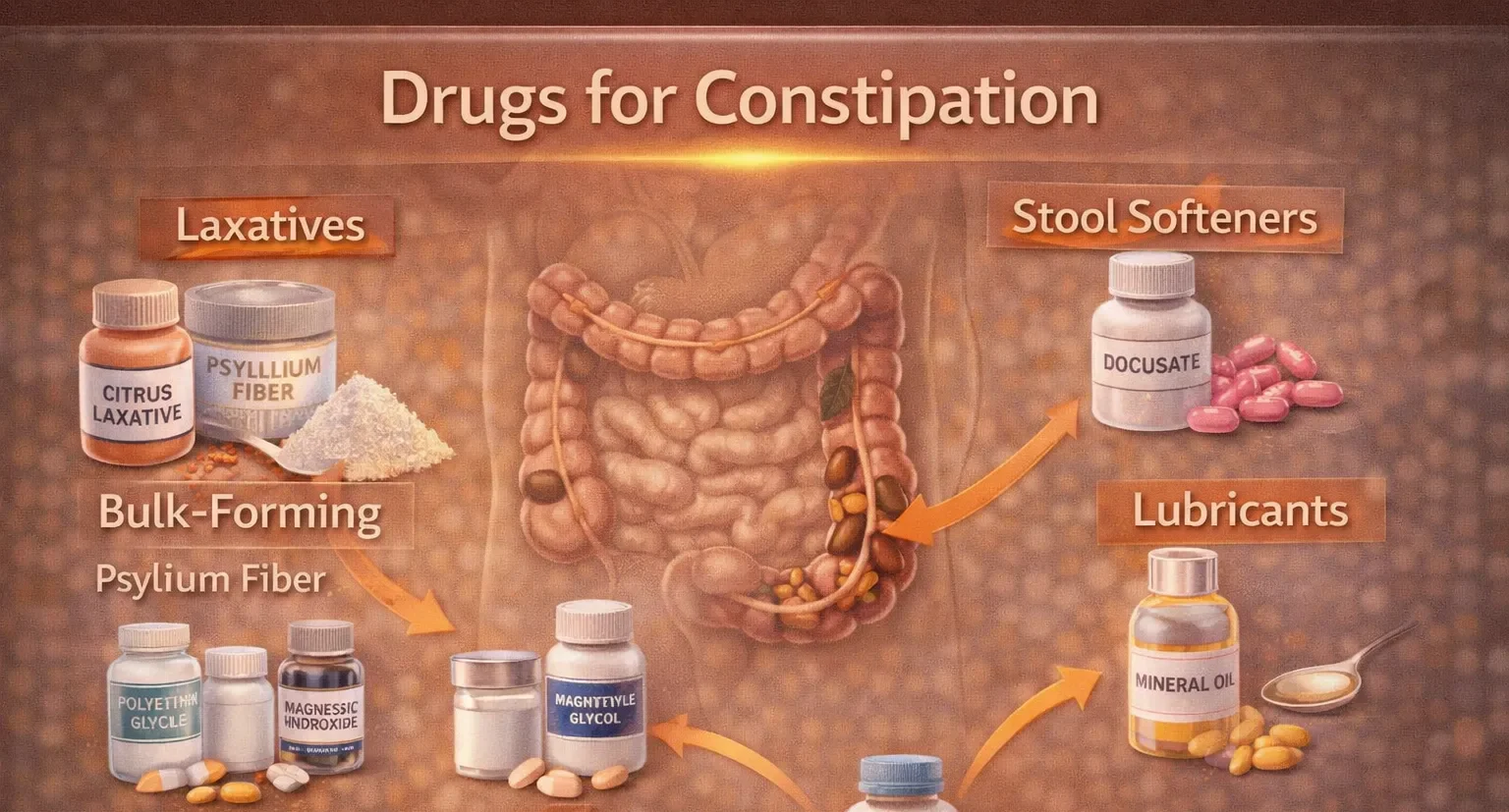
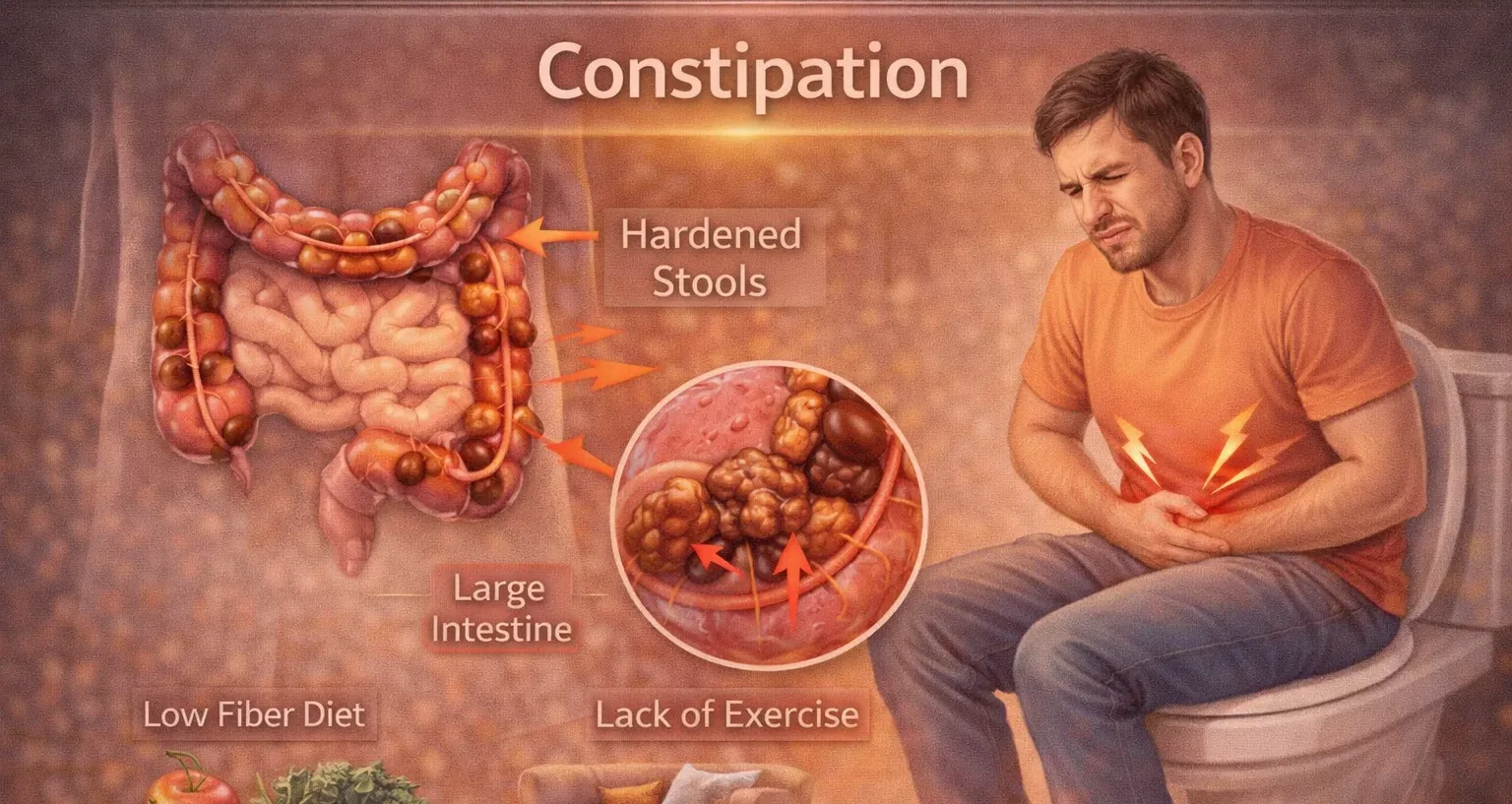
Drugs for Constipation

Drugs for Constipation

Drugs for Constipation include laxatives that increase bowel movement by softening stool or stimulating intestinal motility. Drugs for Constipation Constipation = infrequent or difficult passage of stool, often due to reduced bowel motility or dehydration. Types of Laxatives Bulk-forming Laxatives Examples: Psyllium husk (Isabgol), Methylcellulose Mechanism: Absorb water → increase bulk → stimulate peristalsis Use: … Read more

Constipation

Constipation

What is Constipation? Constipation is a condition where bowel movements become infrequent, difficult, or incomplete. It can be acute or chronic and is influenced by diet, activity level, medications, and health conditions. Common Symptoms Less than 3 bowel movements per week Hard, dry, or lumpy stool Straining during bowel movements Abdominal discomfort or bloating Sensation … Read more

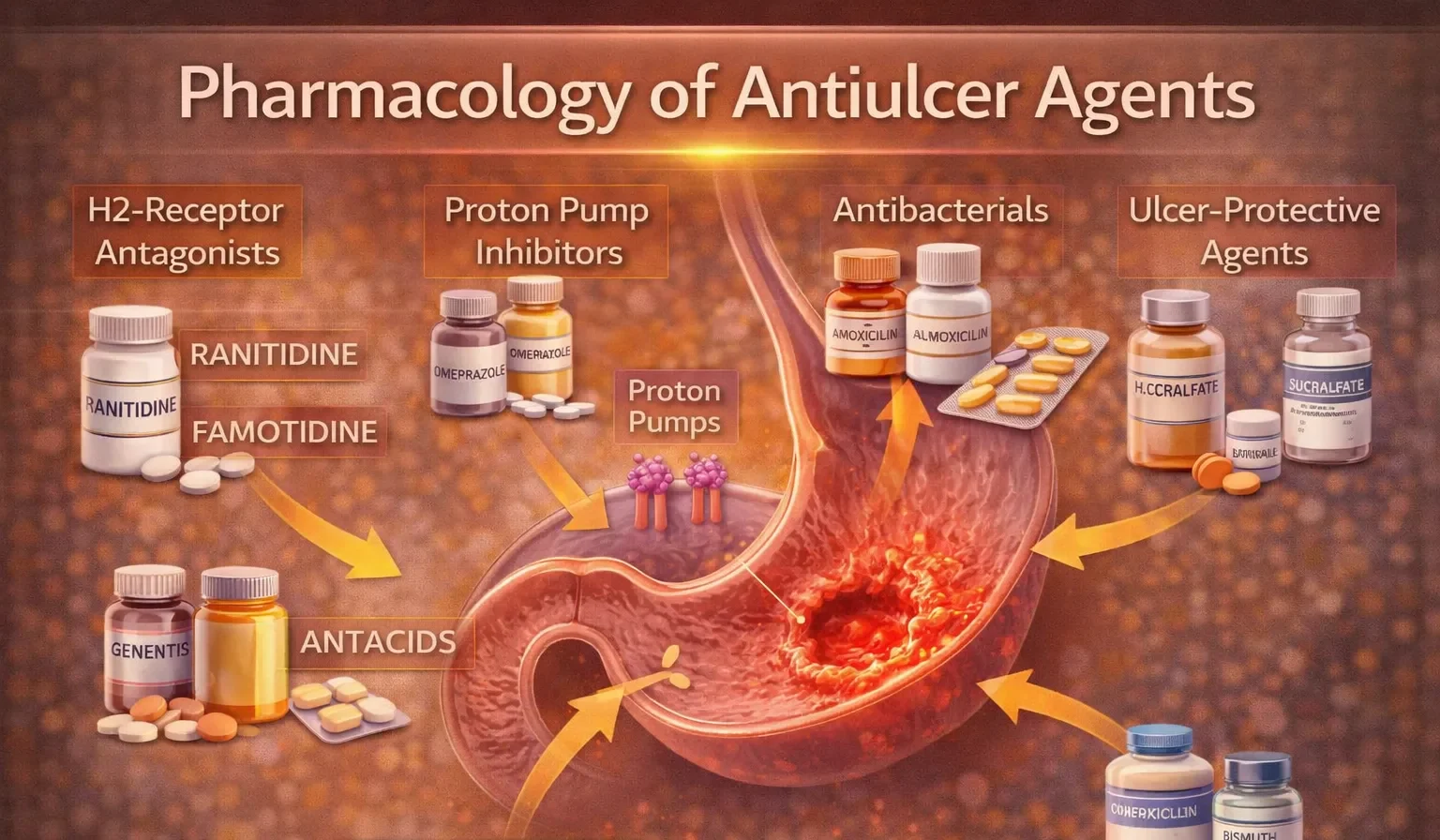
Pharmacology of Antiulcer Agents

Pharmacology of Antiulcer Agents

Pharmacology of Antiulcer Agents explains drugs that reduce gastric acid, protect mucosa, and promote healing of ulcers. Pharmacology of Antiulcer Agents Antiulcer agents are drugs used to treat and prevent ulcers in the stomach and duodenum. These medications work by reducing stomach acid, protecting the stomach lining, or eliminating H. pylori Classes of Antiulcer Drugs … Read more

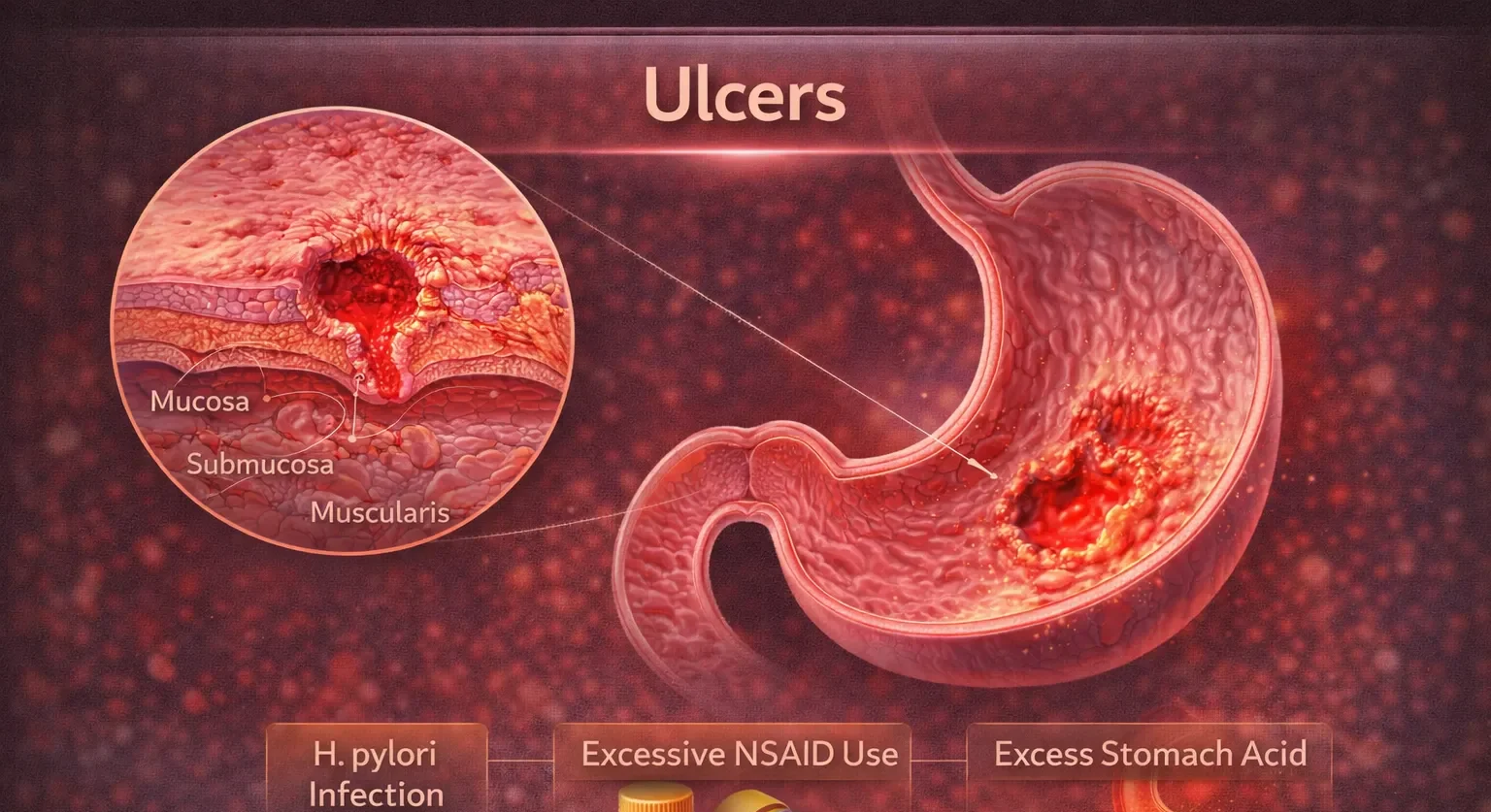
Ulcers

Ulcers

What Are Ulcers? These are open sores that develop in the lining of the stomach, duodenum, or esophagus. The most common type is the peptic ulcer, which includes: Gastric ulcers (stomach) Duodenal ulcers (small intestine) Causes of Ulcers Helicobacter pylori (H. pylori) infection Weakens the protective stomach lining Found in ~50 percent of people worldwide … Read more

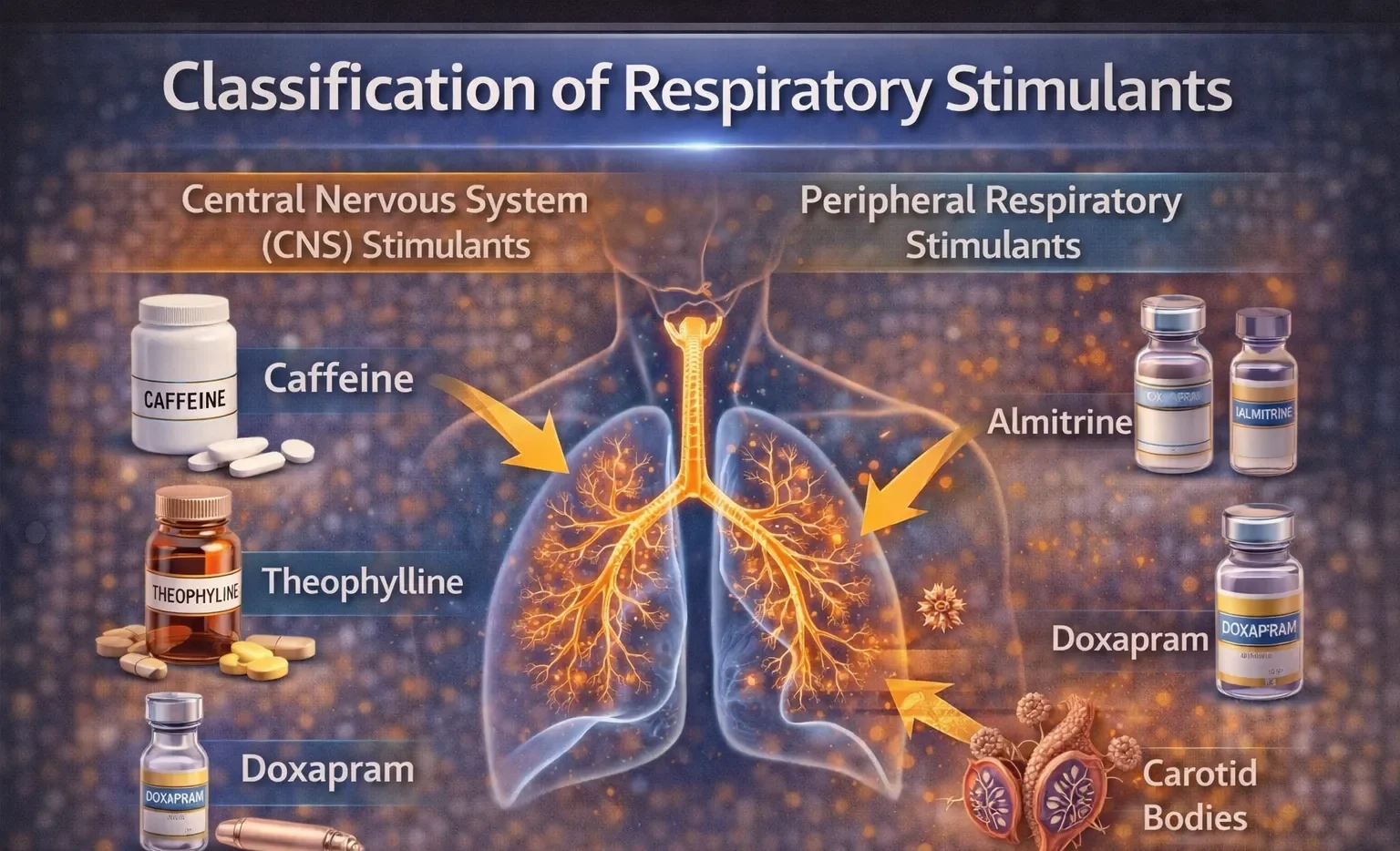
Classification of Respiratory Stimulants

Classification of Respiratory Stimulants

Classification of Respiratory Stimulants explains grouping of drugs based on mechanism and site of action on respiration. Classification of Respiratory Stimulants Central Respiratory Stimulants These act directly on the brainstem respiratory centers or carotid body chemoreceptors. Doxapram Mechanism: Stimulates peripheral chemoreceptors (carotid bodies) and medullary respiratory center → ↑ respiratory rate and tidal volume Use: … Read more

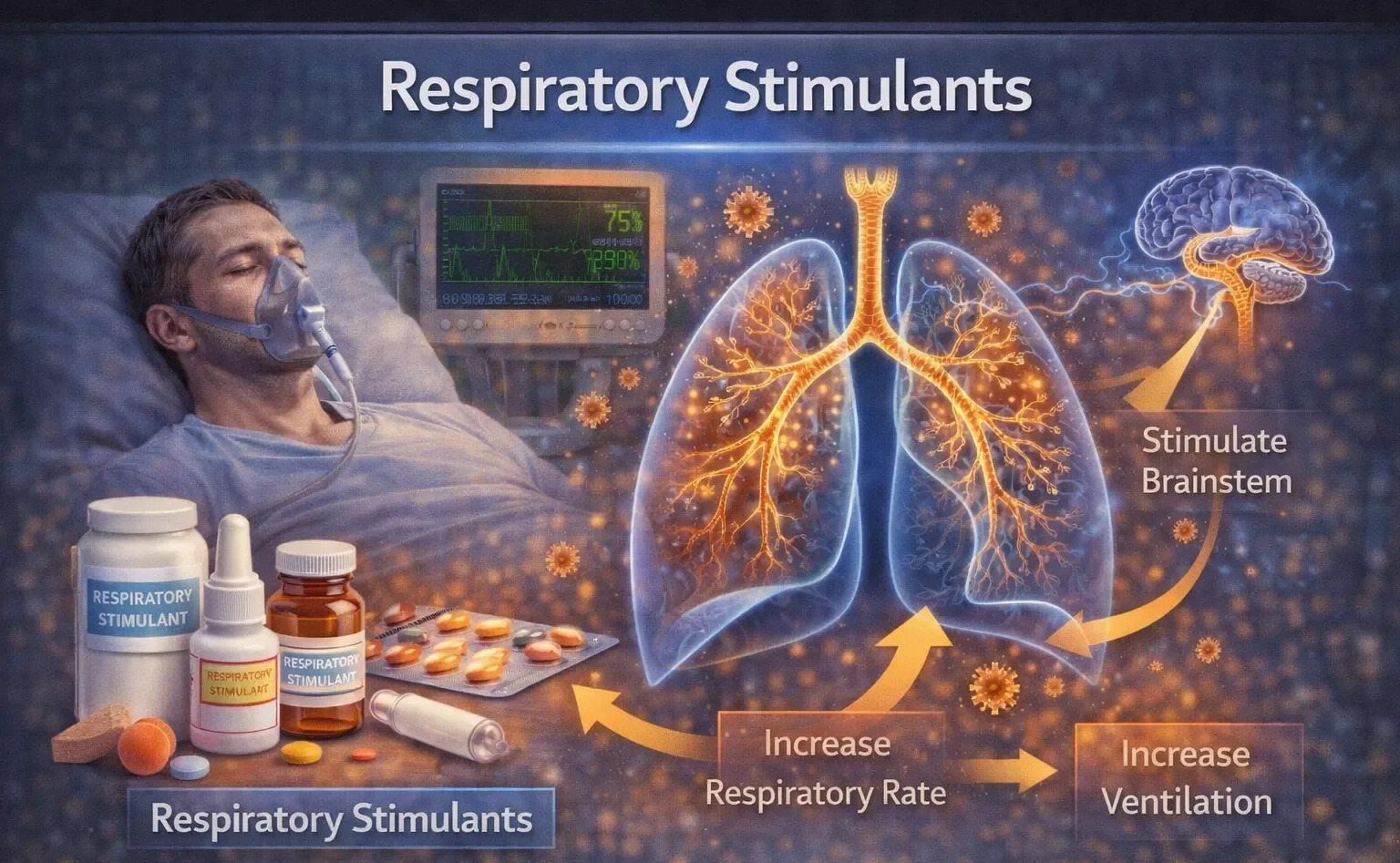
Respiratory Stimulants

Respiratory Stimulants

Definition of Respiratory Stimulants These are drugs that increase the rate and depth of breathing, used to manage respiratory depression or hypoventilation in conditions such as: COPD Sleep apnea Respiratory failure Post-anesthesia recovery Mechanism of Action The exact mechanism depends on the drug class, but generally, respiratory stimulants: Enhance respiratory drive Stimulate respiratory centers in … Read more

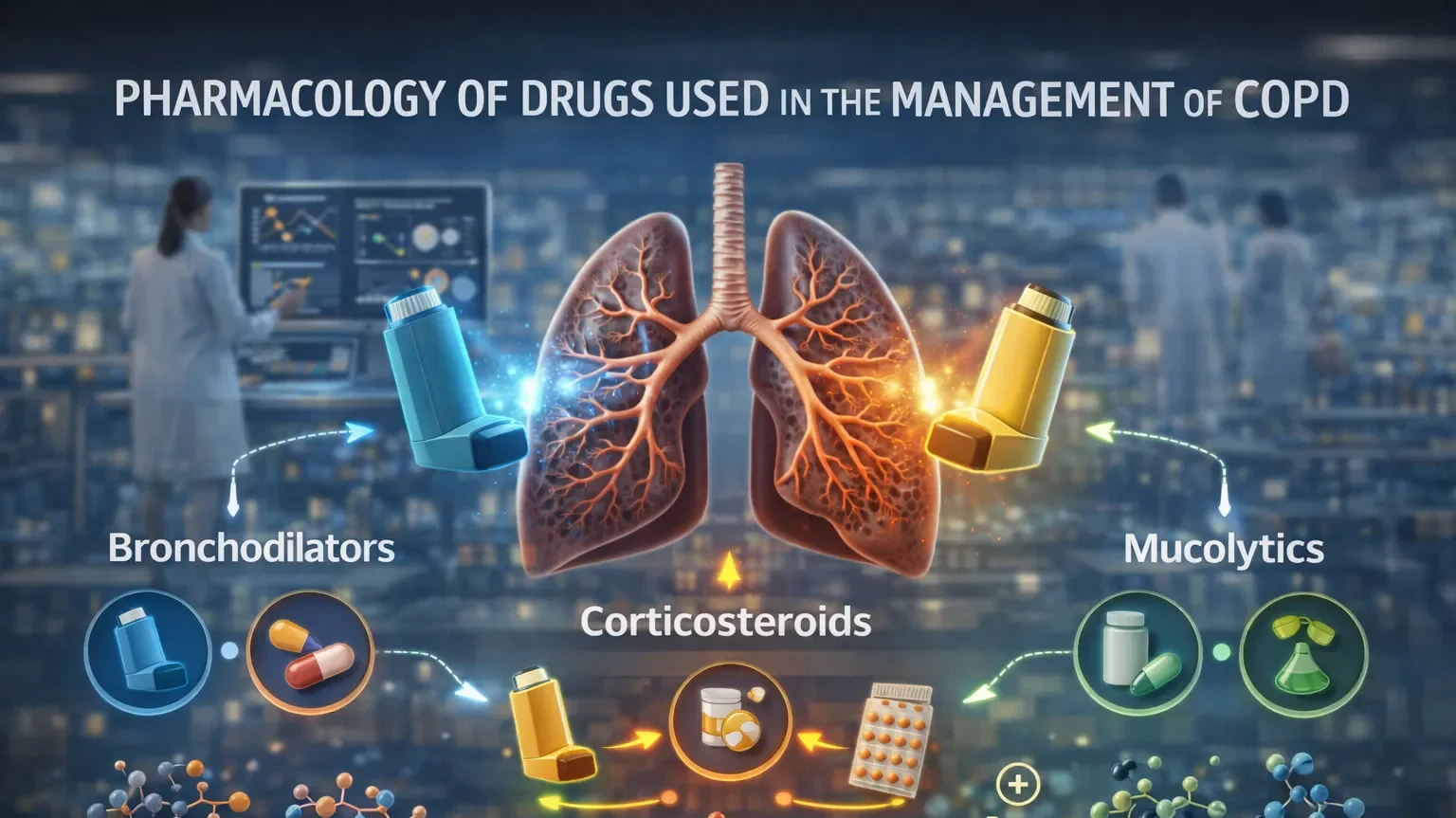
Pharmacology of Drugs Used in the Management of COPD

Pharmacology of Drugs Used in the Management of COPD

Pharmacology of Drugs Used in the Management of COPD Pharmacology of Drugs Used in the Management of COPD explains mechanisms of bronchodilators, steroids, and other agents to improve airflow. Main Classes of Drugs in COPD Bronchodilators These are the cornerstone of COPD treatment. β2-Adrenergic Agonists Examples: Short-acting: Salbutamol Long-acting: Salmeterol, Indacaterol Mechanism: Stimulate β2 receptors … Read more

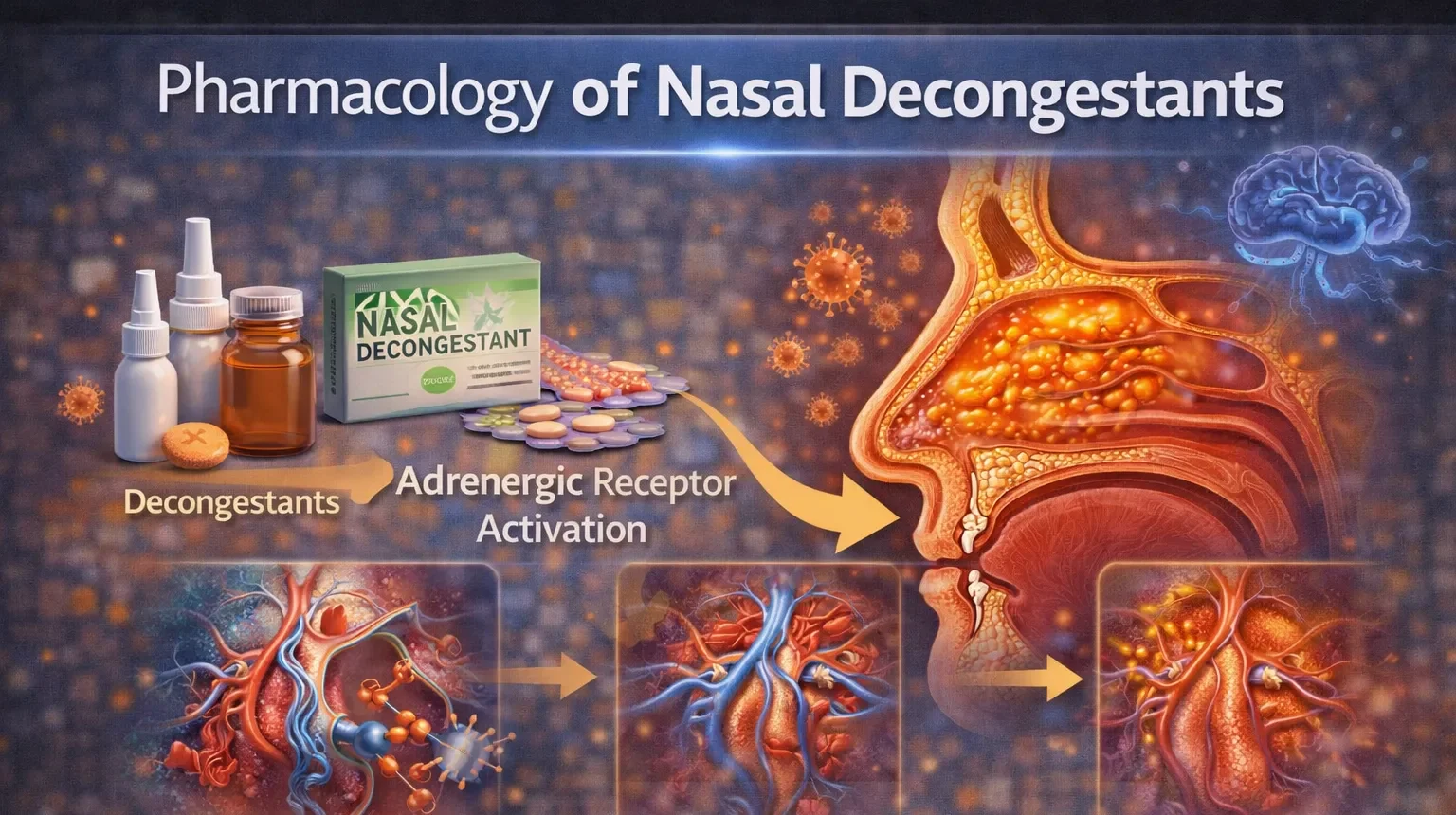
Pharmacology of Nasal Decongestants

Pharmacology of Nasal Decongestants

Pharmacology of Nasal Decongestants explains drugs that relieve nasal congestion by causing vasoconstriction in nasal mucosa. Pharmacology of Nasal Decongestants Nasal congestion is caused by: Dilation of nasal blood vessels Swelling of nasal mucosa Increased nasal secretions It commonly occurs in: Common cold Allergic rhinitis Sinusitis Nasal decongestants (also called sympathomimetics) relieve congestion by vasoconstriction … Read more

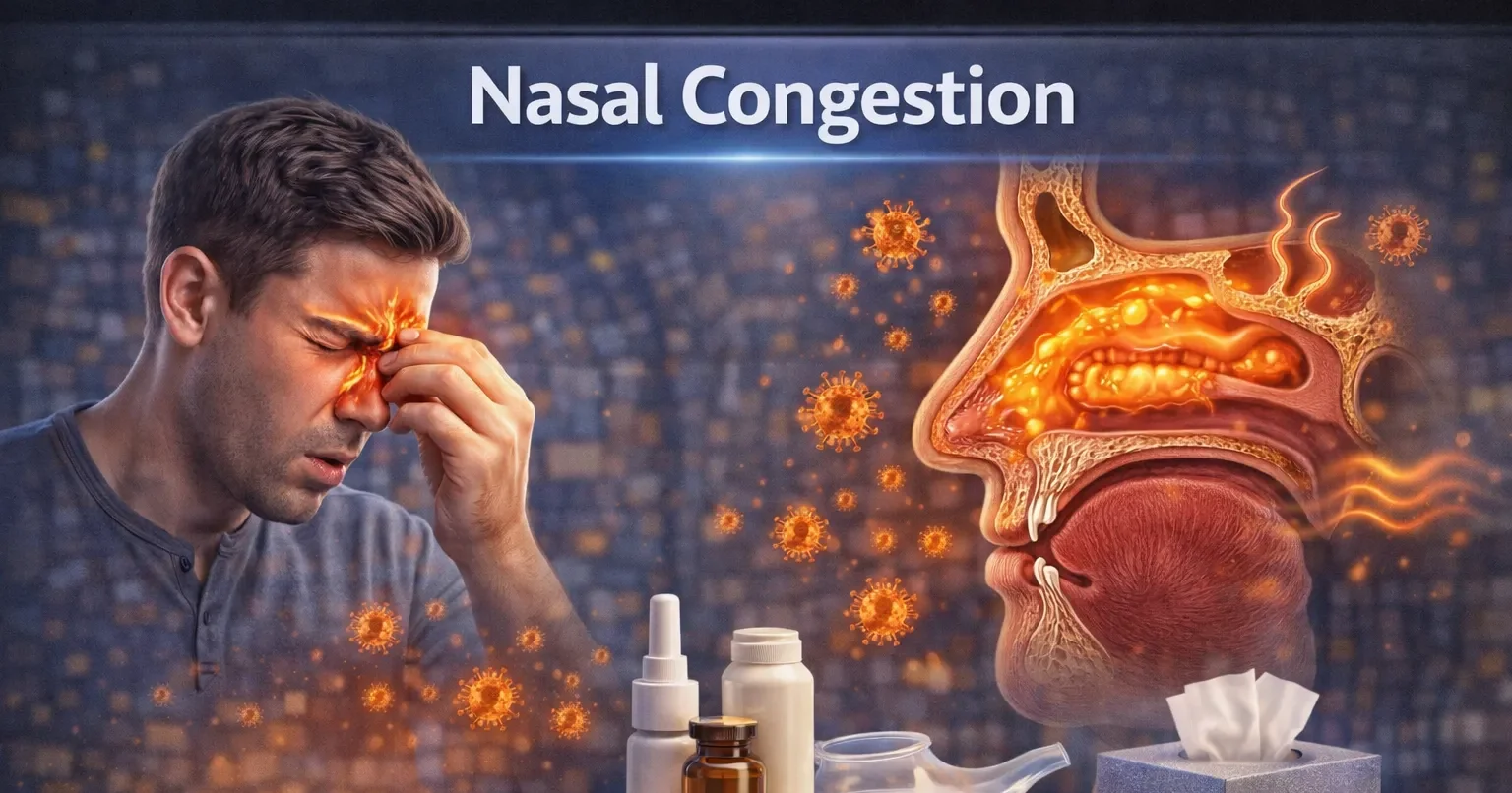
Nasal Congestion

Nasal Congestion

Nasal congestion is swelling and inflammation inside the nose, making breathing difficult. Common Causes: Allergies Infections (cold, sinusitis) Environmental irritants (smoke, pollution) Structural issues (deviated septum, polyps) Medications (certain BP meds, decongestants) Hormonal changes Weather fluctuations Stress Symptoms Blocked or stuffy nose Runny nose Postnasal drip Sneezing and itchy nose Headache or sinus pressure Reduced … Read more